

Selling a Fire Damaged House in Los Angeles County, California


Where You Are Right Now
Selling a fire damaged house in LA County can start with getting a straight-up, no-strings-attached cash offer on the property’s current condition, without having to make promises about repairs to get a buyer on board and then find out what their price is after they take a closer look.
First things first – let’s take a look at the facts: the property address, who has access to it, its current condition, any reports on the damage, the title situation, and the closing date you’d prefer if everything goes through, including any potential hold-ups that could cost you money.
Any no-obligation cash offer you get should clearly lay out the purchase price, contingencies, closing costs, escrow terms and all your responsibilities as a seller, so you can compare the net proceeds, what’s going to be deducted, and the timeline with what an agent thinks you might get.
The price by itself can be misleading – don’t just look at the number on the page, make sure you compare the whole deal, including any inspection period, any credits you might get, the payoff on liens, the paperwork on the loss, and any expenses that are still on your tab before the sale goes through, because an offer that looks bigger might actually leave you with less after all those deductions.
We buy houses after getting inquiries directly from owners, aim to give fair cash offers without making owners fund our work, and explain the numbers so you can decide whether to sell the house as is, do some repairs first, go with a conventional listing, or do something else, all while understanding which conditions could change the price before the sale goes through.
Condition Affects Value & Buyers’ Confidence
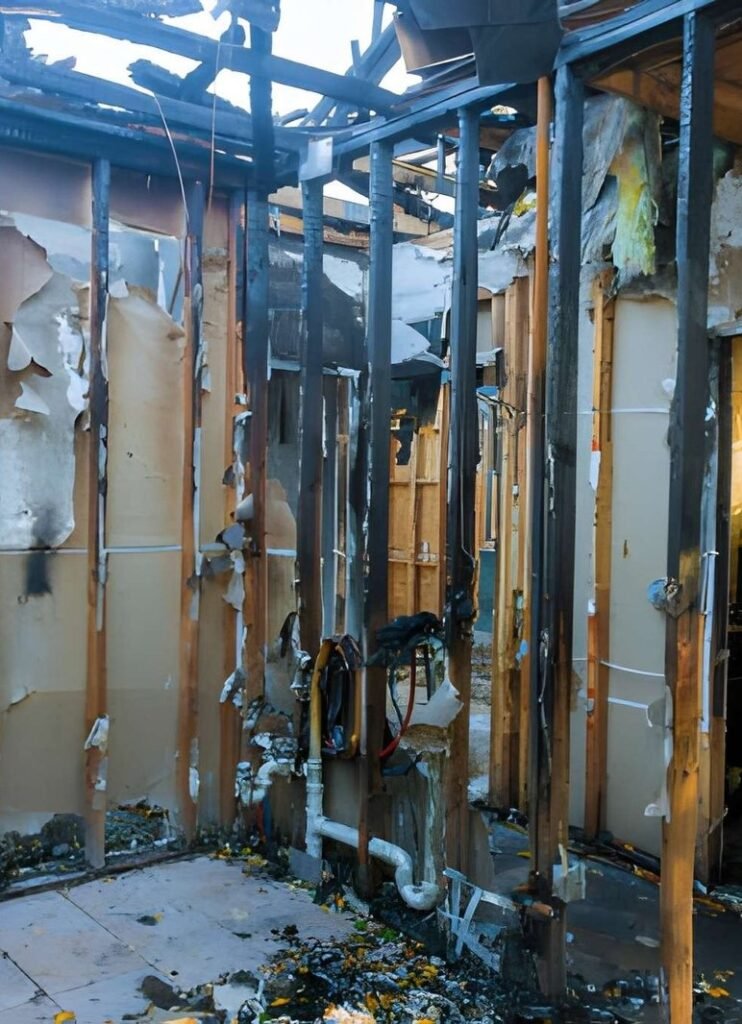
No two fire damages are exactly alike when it comes to valuation problems. Smoke damage or both smoke and water damage in one area can have a big impact on the whole house, even if the burnt area is the only one that’s obviously damaged. And if the damage is severe – framing, roofing, electrical systems, or making it hard to get into the house – a buyer may not be able to figure out what’s still usable.
Uncertainty costs money – inaccessible spaces, disconnected utilities, open permits and incomplete records all leave questions a buyer can’t price as finished work.
Getting access matters. Even when part of the house is still intact, the buyer may need to figure out which parts are actually damaged and which are just assumed to be that way, and that makes it harder to get financing.
The land itself can still support the property value even if the building is damaged. That’s especially true if the lot is still good, has the right zoning, access and remaining improvements, and is still useful under current market conditions.
Damage is one part of the valuation equation. Repair estimates can help you figure out what work needs to be done, but they don’t eliminate hidden conditions, permit uncertainty, or additional repairs that might be needed after you sell – which is why this section isn’t a restoration guide.
Price Today Includes Holding Costs Tomorrow
When analyzing an offer, it usually starts with the property’s pre-fire value and then tests that against the current condition on the day you’re thinking of selling, taking into account the land’s utility, the title situation, any cleanup obligations, records, resale exposure, estimated repair costs and any part of the house that can’t be safely entered or tested.
Having the right documents can help narrow down uncertainty by turning assumptions into facts you can review. Missing or conflicting material, though, can make things worse – especially when the incident reports, insurer estimates, contractor reports and permit files all don’t agree on the scope or the date of the inspection.
| Costs before the sale | the Effect on the owner’s outcome |
|---|---|
| Mortgage payments and liens | Cut into the funds that remain after the payoff |
| Property taxes | Keep going unless you’ve got a verified way to get relief |
| Insurance, fencing, utilities, and security | Keep the site safe while you still own it and have control over access |
| Reports, cleanup records, and permit research | Clarify the risks, but might take time, expense and coordination |
| Time it out | Just adds to your carrying costs and the risk of changing market conditions |
Holding onto the property can become a financial burden before you even start any construction – loan payments, taxes, insurance, security, maintenance, utilities and monitoring all keep going while you still own it and are responsible for any changes.
Legal issues can drag things out even longer. And the longer you wait, the more exposed you are to changing market value and additional site expense. A delayed closing should be compared to the full cost of getting to that point, rather than counting on it as free.
Net proceeds are the useful measure here, because deducting repair costs alone misses commissions, buyer credits, auction charges, title expenses, continuing carrying costs and the possibility that a financed transaction falls through before you even settle – after you’ve already spent money getting ready for the sale and waiting.

Keep Insurance Rights Separate from Sale Rights
Insurance rights and title transfer separately. Before signing a purchase contract, make sure the buyer’s treatment of unresolved claims, documents, access and post-closing cooperation lines up with the insurer, mortgage lender and escrow holder.
Insurer terms control because structural repair payments can affect both the loan payoff and the cash you’ve got available at closing, but the buyer shouldn’t be assumed to pick up the existing insurance claim or the right to continue negotiating it and documenting what cooperation is possible before transfer.
For a home with a mortgage in California, a check to cover any structural repair is typically made out to both the insured and the lender. What the lender does next is usually hold that money aside in an escrow account and then hand it over as the repairs get done.
The rules for replacing personal belongings are a bit different because whether or not you get replacement cost benefits under your policy hangs on whether they can really be replaced. Some stuff that cant be replaced is actually only paid out at its actual cash value under the policy.
Debris removal benefits often need a special look because Los Angeles County says if you go through the county’s program for getting rid of debris, you may need to sort things out with them first so you dont get twice paid for the same thing plus avoid any later disagreements. You should keep separate records of any insurance funds you get and whether youve paid those off or not, unless you have a signed agreement saying otherwise.
Selling as is still keeps disclosure duty
In California, the Department of Insurance says the physical condition of a home is separate from what a seller has to disclose in a sale. This means that even if you are selling a home “as is”, the seller still has to follow all the disclosure rules laid out in the Civil Code 1102.
This code says that single family homes, except where the law says a seller can get away with waiving these rules, must follow the transfer disclosure rules and cannot waive the need for a transfer disclosure statement in an “as is” sale. Section 1102.6 gives the seller a special form they need to give to the buyer, and section 1102.1 says that even if the seller is selling the home “as is”, the seller is still on the hook for any material facts that they know about the home, including things like fire damage and already done repair work.
Known facts that the seller should disclose include fire damage, broken systems, any notes about safety and what an inspector has said, what permits were pulled, and any information about the repairs that were already done.
Accuracy is key here. What matters is what the seller actually knows, not what they can only guess at. For instance, if the seller has no idea whether or not the fire damaged some part of the home, that seller shouldnt just make something up – they should say “we dont know”.
Things that might be a hazard to the home, like a fire hazard zone, are covered under a different part of the law, – the Natural Hazard Disclosure Statement (section 1103.2) – and this covers mapped areas where there is a fire hazard and some wild land areas.
What people often seem to get confused about is how to read the maps. State guidance says these maps show the long term risk of a fire, not whether or not a specific house is going to burn next week.
If a house is in a defensible space zone, some special rules may apply. For instance, the buyer might need to agree to do some additional work on the home to make it safer, and the seller needs to have on file some proof of that agreement. (Section 1102.19)
Working with a real estate agent or a lawyer can really help with all of this, so sellers know what paperwork they need to fill out and what they can say to the buyer. Its worth noting that just because the seller has agreed to sell the home “as is”, that does not mean they dont have to tell the buyer anything. In fact, the seller is still on the hook for any known problems with the home.
A damaged assessment can change the tax account
In LA County, if a homeowner has suffered a loss due to fire or another type of disaster, they may be able to get their property reassessed. This is because the county has a rule that lets them reevaluate the property and potentially lower the tax bill. To get this done, you need to apply for a reassessment (form ADS-820) and you need to show that you have suffered over $10,000 in damages to the property. You also need to do this within a year of the loss. The more information you have to back up your application – like photos, contractor estimates, and fire insurance claim documents – the better.
This does not mean that the county will automatically lower your taxes, it just means that you are asking for a reassessment. You still have to pay your taxes until the county gets a chance to review the application.
You should check with your lender to confirm this before you make any payments, because the county may eventually offer you a lower tax bill. And even if your lender handles the taxes, they may need to send you some money back if the county lowers the tax bill.

Put each records question on the right counter
First things first, you need to figure out who is responsible for looking after the records. When a fire is being handled by the LA County Fire Department, you should reach out to the Risk Management Division.
But if the fire department that handled it is actually one of the many fire departments in the area (because fire districts arent all the same across LA), then you need to find out who actually handled the response – because if you send this to the wrong place, they wont be able to help.
Different cities have their own building permits and inspections, so you should figure out which one is in charge. For unincorporated areas and certain contract jurisdictions, you can find yourself with the LA County Public Works Building and Safety department. Their FAQ even says as much – demolishing a building requires a permit, and these arent issued by the county anymore.
If it wasnt a county job, you should get in touch with the building department in the city where the property is located. Which, if you are still dealing with records from the county cleanup program, might be pretty tricky to figure out. But in any case, a completed cleanup program should direct you to either the Fire Debris Removal Permit closure records or to the final sign-off.
Keep in mind that while records are nice to have, getting your facts straight will also help you navigate which of these departments to ask about what you need.
Escrow Gathers It All Up
They collect the purchase agreement, payoff demands, title conditions, disclosure package, tax data, signed instructions, and any document that impacts insurance or cleanup. On top of that, they have to verify the authority where a trust, estate, business entity, or court order is in charge of the sale.
Don’t get it twisted – a cash deal won’t fix a lousy title, and you still need to sort out authority or liens before sealing the deal.
To get that recorder’s stamp of approval, you need a grant deed that’s been signed by the grantor and notarized. Oh and the Recorder’s deed page wants a Preliminary Change of Ownership Report when the property changes hands.
Once you’ve got your funding and title sorted, you can go ahead and deliver the deed for recording – with the tax split shown on the settlement statement.
The general county documentary transfer tax is $0.55 for every $500 (or fraction thereof) in taxable consideration or value that’s beyond the permitted exclusions when that amount tops $100. What those permitted exclusions are depends on the transaction – not the state of the building.
This being said, some local municipalities add their own transfer tax, so it all depends on where you are to get the final calculation.
The final breakdown should include payoff, liens, prorations, documentary taxes, agreed fees, credits, and the balance due to the seller. After the funds are in hand and the records are on file, escrow distributes the proceeds according to the signed instructions.
A smooth transaction requires clearing up any open issues before the recordable documents are ready – and a cash deal removes the financing condition, but not the other requirements (disclosure, authority, tax, lien or deed).

Weigh The Options By Cost, Time, And Certainty – Four Paths To Consider
Fixing up the property before it hits the market can make it a whole lot more appealing to buyers – and potentially wider the buyer pool. However, that means the owner still has to cover construction costs, permits, supervision, delays, the risk of overruns, and the possibility of failed inspections before they even start listing.
On the flip side, listing without doing any repairs gives you a lot more exposure, but you’re still on the hook for inspections, financing conditions, commissions, buyer credits, and continued site expenses even after the contract says the owner will sell as is.
An auction creates a defined sale event, but fees and bidder readiness still play a role – and you can set a reserve price to prevent the sale from going through.
A direct sale to a cash buyer can make it a whole lot easier to define the timing, but the offer will need to take into account the risk, necessary work, resale time, and the buyer’s required return. As such, don’t compare that figure to the repaired retail price as if both routes came with zero obligations.
Don’t get fooled by the gross price – upfront spending and the risk of the sale not going through belong right beside it.
Your priorities decide where the balance sits, so compare the funds that are likely to remain, spending required beforehand, exposure to ongoing expenses, and the chance that a transaction won’t finish; someone looking for certainty may fit selling fire damaged properties directly, while repair, listing, or auction may suit someone willing to wait months, personally manage contractors, and absorb a lot more uncertainty.
Communities Within Our County Buying Area
We’ve got you covered for Los Angeles property sale options – whether you’re comparing a direct route to a listed one. Nearby pages break down Long Beach cash buyer information, Pasadena damaged home sales, Glendale direct purchase guidance, and Burbank fire property choices with city specific jurisdiction details.
Santa Monica as-is sales in properties inside that local boundary get their own page.
Beverly Hills cash offers, Culver City buyer options, Inglewood damaged property information, and Torrance direct sale terms all get their own page – the name of the city keeps the same while matching the linked page.
Additional coverage includes Redondo Beach sale routes for owners reviewing the options available.
For unincorporated locations, we look at the address because even within the county, fire response, permits, planning authority, and the office holding the record can all differ.